✉ hello@onemoregarden.com


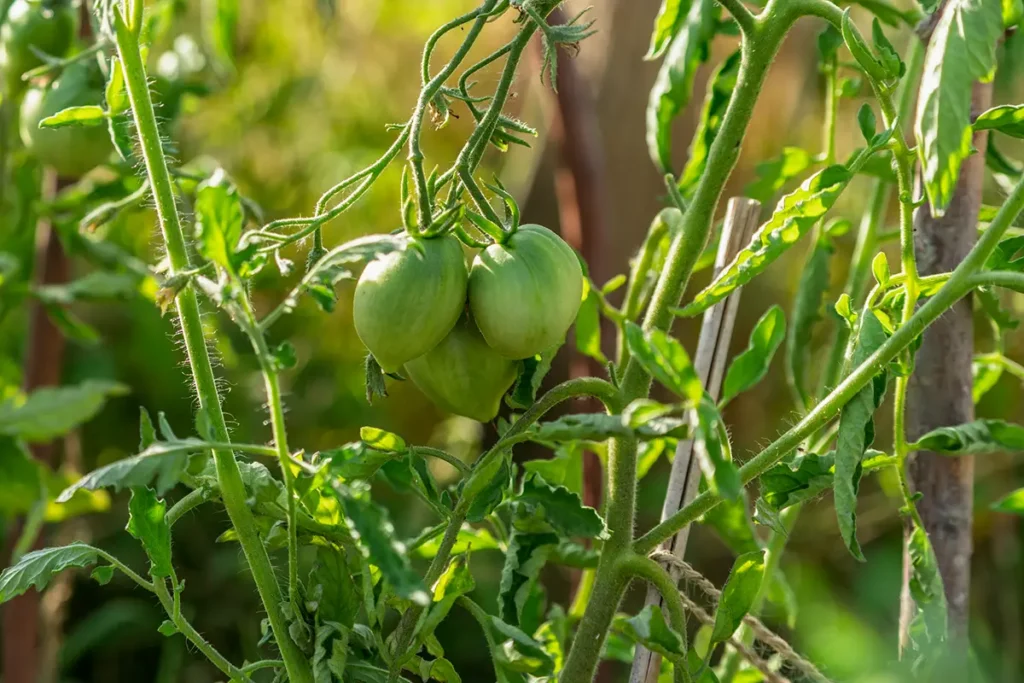
Everyone keeps on saying that for the best tomato harvest you should side-shoot your tomatoes. But if you’ve ever wondered what happens if you don’t pinch them out (or you forget pinching out your tomatoes …), I have some first-hand experience to share.
This is what happens if you don’t pinch out tomatoes
My very first year growing tomatoes outdoors on the allotment, I decided to run an experiment. Well, ‘decided’ is doing a lot of heavy lifting here, because actually, I kind of neglected my tomato plants a bit and left the side shoots run amok.
The result was … messy. Instead of growing tall and proud, my tomato plants poured all their energy into producing a tangle of side shoots. Come summer, the tomato patch didn’t look like a productive plot, but more like a chaotic green jungle. While the fruits were still quite plentiful, they were distinctly smaller. Also, the plants didn’t grow that high and my 2 meter stakes seemed a bit overkill.
If you want to avoid a messy plot and maximize your tomato yield, here is everything you need to know about how to prune tomato plants successfully.
What are tomato side shoots and tomato suckers?
Tomato suckers: When you plant out tomatoes, the part of the stem below the soil surface has the wonderful capacity to create more roots. That makes your tomato plants incredibly vigorous, but will also shoot up tomato suckers. Those are new shoots emerging from beneath the soil and they will create a new stem on your plant.
Tomato side shoots: The sneaky side shoots crop up in the leaf axils, which is the ‘V’ where a leaf branch meets the main stem. Left to their own devices, these tiny sprigs quickly disguise themselves as entirely new main stems. These freeloaders will literally suck energy away from the main prize: the fruit.

Not pinching out tomatoes: why I won’t repeat my experiment
As my chaotic allotment experiment proved, letting my plants go wild didn’t do me any favors. So I went back to regularly managing these rogue suckers and shoots, because it has three massive benefits:
- Bigger, better tomatoes: Evicting the tomato side-shoots ensures the plant channels its finite energy into developing decently sized tomatoes rather than a massive web of leaves.
- Disease prevention: A dense tomato patch creates a humid, stagnant micro-climate – which is a great climate for the tomato disease phytophtora. Regular pruning drastically lowers the chances of your hard work being ruined by devastating fungi.
- Easier harvesting and better ripening: Less foliage means more sunlight reaches the trusses. Your tomatoes will ripen much faster, and harvesting becomes a pleasure rather than a treasure hunt on all fours through a jungle.

Which tomatoes varieties need pinching out?
Not every tomato plant needs pinching out. There are two main tomato types, and only one benefits from removing the side-shoots.
Indeterminate tomatoes (cordon tomatoes)
These upright varieties love regular side-shooting. They are genetically designed to grow up a single, central main stem from which the fruit trusses emerge. If you are growing tomatoes on an allotment or in a greenhouse using canes or strings, these are almost certainly the ones you have.
Determinate tomatoes (bush tomatoes)
Bush varieties or trailing basket types can largely be left to their own devices. They naturally stop growing at a certain height and produce fruit on their side branches. You might only snip them occasionally just to thin out the center and let a bit of sunshine through.
Allotment tip: Before sowing your seeds, consider your space. If you want to maximize vertical space, choose cordon tomatoes. If you have a windy plot with less support, bush tomatoes might be your best bet.
When to start pinching out tomatoes
Check your tomato patch once or twice a week during the flowering and fruiting season. For me, this usually starts in June. Quite early on, it becomes obvious which stems belong to the main framework and which are just trying their luck.
The side-shoots appear just above the junction where the leaf meets the stem. As soon as you spot one, it is easily dealt with using the step-by-step method below.
How to pinch out tomatoes: a step-by-step guide
| Tool | Purpose |
|---|---|
| Your fingers | For pinching out young, tender side-shoots. |
| Sharp secateurs | For the larger shoots that managed to grow behind your back. |
| Garden twine | To tie in the main stem as it grows taller. |
Step 1: Identify your tomato type
Make sure you aren’t accidentally stripping a bush tomato. If it’s an upright cordon, get ready to prune.
Step 2: Spot the tomato sucker or side-shoot
Inspect your plant. Look for the small, enthusiastic side-stems growing directly out of the leaf axils, just above a leaf joint.

Step 3: Pinch or snip the shoot
- If the shoot is young: Pinch it near its base between your thumb and index finger. Snap it sharply back and forth so it breaks off cleanly.
- If the shoot is thick: Fetch your secateurs and snip it off cleanly at the base. Make sure you keep the blades clean to prevent spreading Phytophthora infestans (blight).
Step 4: Tie in the main stem
Combine your pruning routine with supporting the plant. Gently wind the main stem around your support strings, or secure it to your allotment stakes with twine. Don’t tie it too tight, to give the stem room to expand.
Step 5: Strip some leaves
I always prune the leaves that touch the ground and one or two leaves above that. It will make the plant send more energy to the development of fruits instead of foliage. Later in the summer, I also snip away any yellowing or spent leaves to let more sun through to ripen the last green tomatoes.
Step 6: Pinching out the top of your tomato plant (optional)
Has your plant reached the roof of the greenhouse or the top of its stake? Then it is time to halt its ambitions by pinching out the main growing tip. Doing this after the plant has set about 4 to 5 trusses outdoors stops it from wasting energy on late flowers that stand absolutely no chance of ripening before the first frosts arrive.