✉ hello@onemoregarden.com


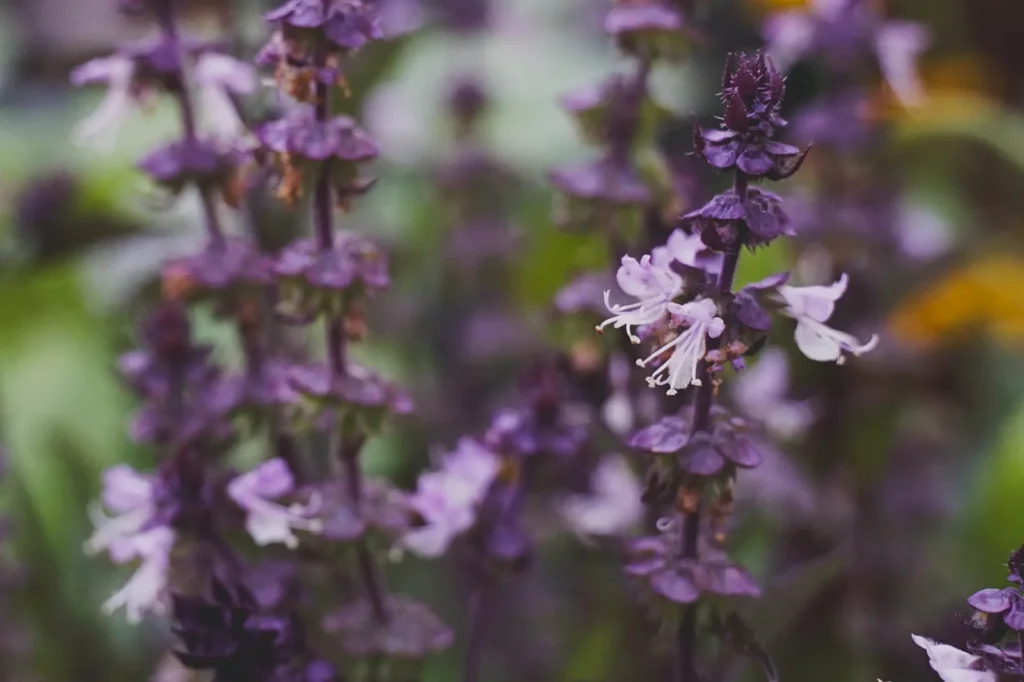
You’ve been happily harvesting basil leaves all summer and suddenly … your basil has flowers! Maybe you’ve heard that flowering means your basil’s ‘done for’. But that is actually not the whole story. Let me tell you what basil flowers mean for flavor and growth, and what you can do next.
Why basil flowers in the first place
Basil (Latin name: Ocimum basilicum) is an annual plant. That means its lifecycle lasts just one season. In that time span the plant has to grow, mature, flower and set seed. After that it will die back. Flowering, also called ‘bolting’, happens when your basil plant shifts from growing leaves to reproducing. That means it will start directing its energy from growing lush leaves to producing flowers and seeds.
So setting seed is part of the lifecycle, but the circumstances can make the end come sooner than planned:
- Heat or drought stress: Hot weather and inconsistent watering tell the plant it’s time to wrap things up.
- Infrequent harvesting: If you let the plant grow tall and leggy without regular picking, it’s more likely to flower.
- Age: Even when all circumstances are perfect, older basil plants will naturally start flowering as the season progresses.
How flowering basil affects flavor
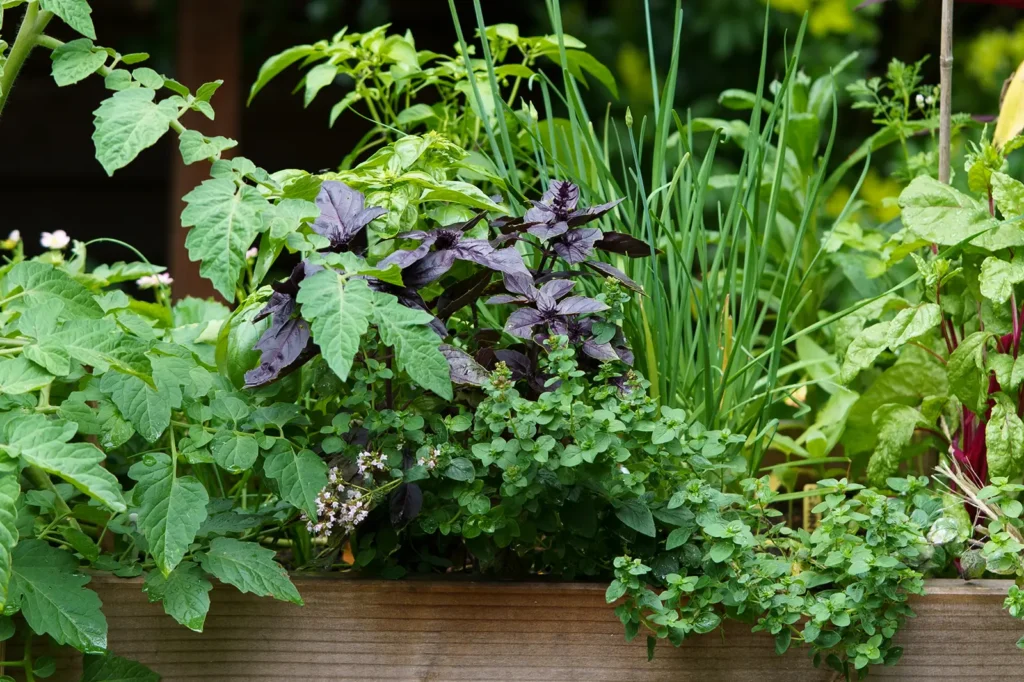
So why is flowering ‘bad’ for your basil? Well, I don’t think it’s bad per se. But culinarily speaking, once your basil flowers, the flavor of the leaves changes. The essential oils that give basil its sweet, peppery scent get redirected toward the flowers and seeds. The leaves often become tougher and more bitter.
Is basil still edible after flowering?
Yes, you can still eat the leaves, as they’re perfectly edible. But it’s better to not use them in salads or caprese anymore. They’re better suited for cooked dishes or for making pesto. By the way, the basil flowers are edible, so you can also use them as garnish, infuse oil with them or make a basil flower pesto.
Cut or keep basil flowers?
When you see your basil starts to burst into bloom, you have two options. Either cut the flowers to keep the plant producing leaves, or let it flower. Both have its advantages and disadvantages, but it depends on your goals.
1. Pinch basil flowers to keep harvesting leaves
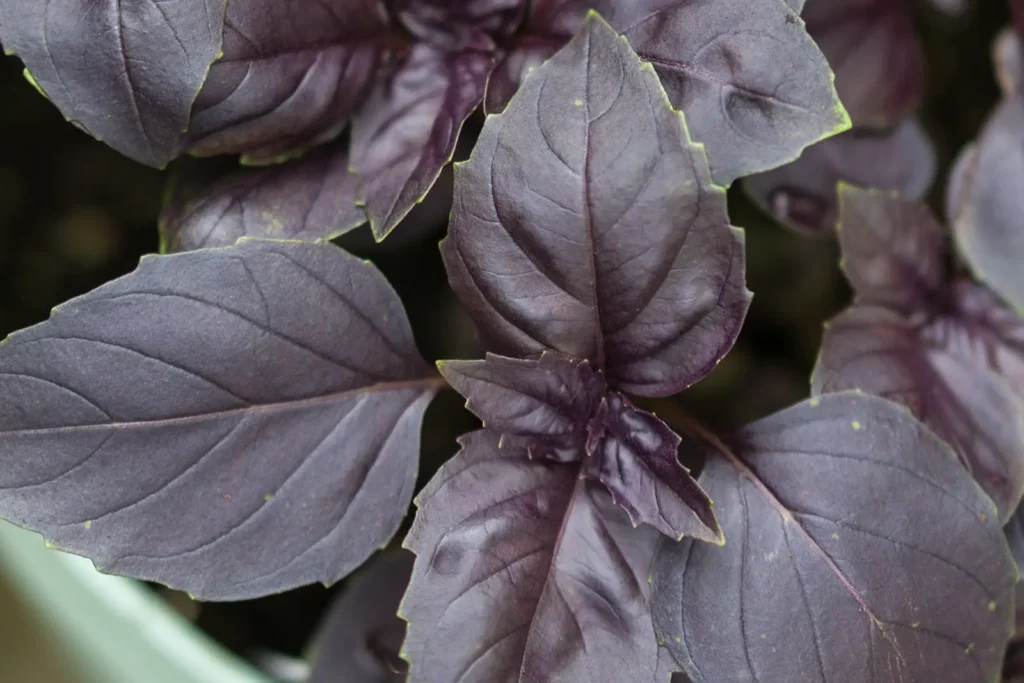
If your goal is flavor and a steady supply of fresh leaves for cooking, it’s best to pinch out the flower stalks. Here’s what to do:
- Pinch or cut the flower stalk right above a pair of leaves or nodes (the spot where two small leaves branch out from the stem). This encourages the plant to branch out (which means even more leaves, yay!) and keep growing.
- Harvest often. Regular picking keeps the plant in ‘growth mode’ and prevents more flower spikes.
- Keep it healthy. Water basil consistently and give it enough sunlight – at least six hours a day. Stress makes the plants think that they’d better start reproducing while they still can. And that makes them bolt sooner.
- Feed lightly. A small boost of balanced fertilizer or compost tea can help the plants recover energy after pruning.
2. Let your basil flower for bees and seeds
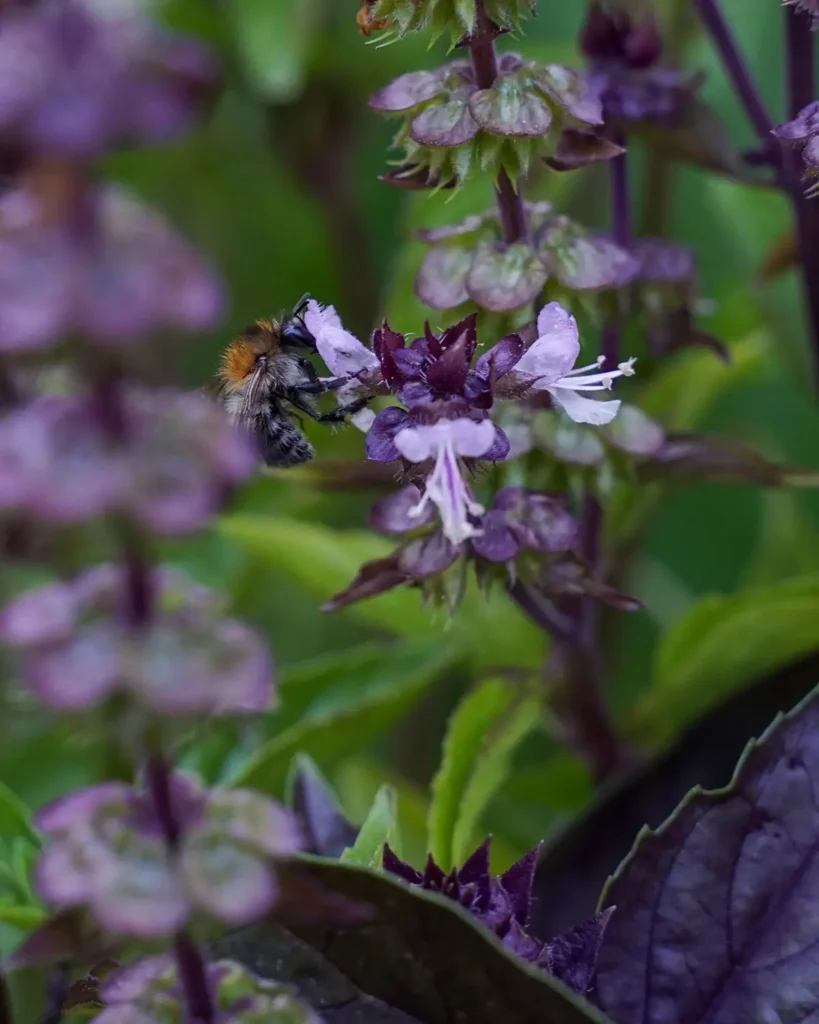
If you’ve got more basil than you can use, or you want to save your own seeds and attract pollinators, just let your basil flower. Here’s why that’s actually a good bad thing:
- Pollinator heaven: Bees, butterflies, and other beneficial insects absolutely love basil flowers! Letting a few plants bolt can will keep the insects coming – and help boost pollination in the rest of your garden.
- Seed saving: Once the flowers dry out, they’ll form small seed pods. You can collect these and use them for next year’s planting.
- Ornamental flowers: The flowers are not just edible, but also lovely in bouquets or for drying the flowers (you can just hang a bunch flowers upside down).
Saving seeds from basil flowers
If you decide to let your basil bloom, collecting seeds is easy:
- Wait until the flower spikes dry and turn brown.
- Cut them off and gently crumble them over a paper towel or bag.
- Separate the tiny black seeds from the dried flower bits (works best by gently blowing the dried bits away).
- Store the seeds in a labeled envelope or paper bag in a cool, dry place until next season.
Seeds stay viable for several years, as long as you keep them dry and out of sunlight.