✉ hello@onemoregarden.com


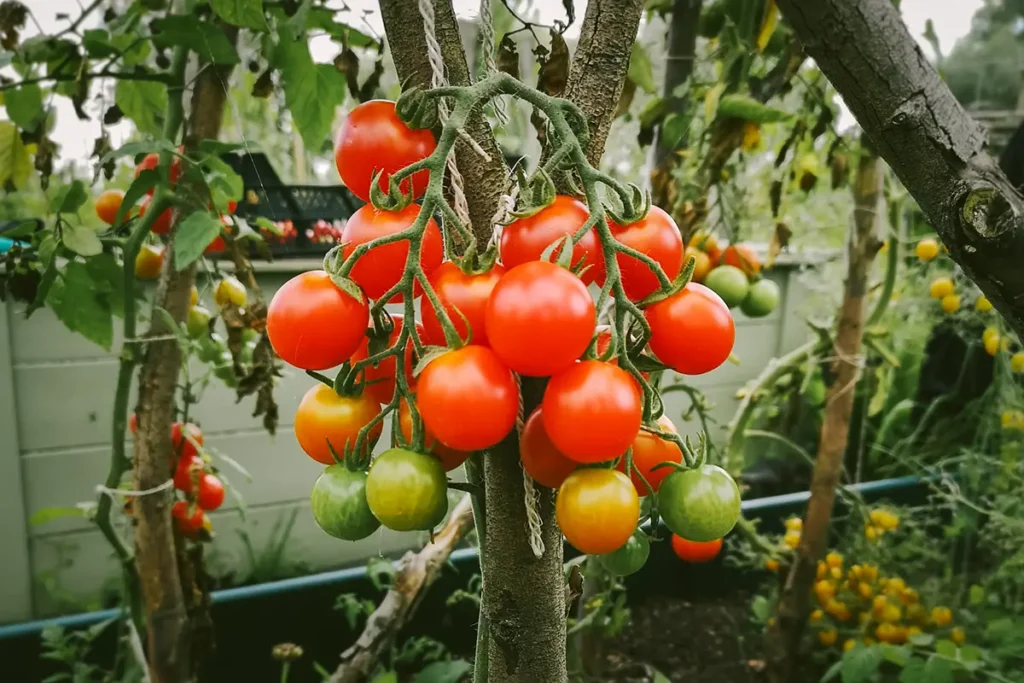
It is the wisdom I’ve been reading in pretty much every gardening book and hearing from every seasoned allotmenteer: “Tomatoes MUST be under glass.” They treat the poor plants like Victorian ladies who are far too delicate for a breeze. And of course tomatoes growing outdoors are a positive magnet for the dreaded tomato blight the moment a raindrop dares to land on a leaf.
But I am stubborn and lazy, so I decided to ignore all the experts. No plastic tunnels or pampering – just the unsheltered open space that is my allotment. And I must say, most of my tomatoes did splendidly last year, but not so much the year before. The secret, in my humble experience, isn’t a roof over their heads, but choosing the right varieties and consistent care.
Should you grow tomatoes outdoors or in a greenhouse? Debunking the shelter myth
While a greenhouse has its advantages – mainly a longer season and a place to hide from the wind yourself – it is by no means a prerequisite for success. Lucky for me, because a) I don’t have the budget, and b) the rules of my allotment say ‘no’ to a proper greenhouse.
However, in the open ground, plants benefit from something a greenhouse often lacks: proper ventilation. Where a greenhouse can become a stagnant, broiling soup of humid air – an open invitation for every fungus in the county and beyond – the wind in the field ensures leaves dry off rapidly after a downpour.
My experience has showed me that plants become far more robust when they have to contend with the elements. But don’t mistake a lack of a roof for a lack of responsibility. The open field doesn’t tolerate laziness!
Which tomatoes grow best outdoors? Why I leave the beefsteaks inside
When growing outdoors, your choice of variety is your primary weapon. I’ve learned that outdoor beefsteaks are, more often than not, a soggy disappointment. They require far too much warmth and far too much time to contemplate ripening. By the time those massive fruits finally consider turning red, the autumn damp has usually arrived, and rot takes hold with gleeful abandon.
Stick to the smaller kinds, such as cherry tomatoes. These little flavor bombs ripen at a sprint and are far less inclined to split than their beefy cousins. They possess a thin skin that, curiously, seems to have more ‘stretch’ when the weather turns fickle.
Tomato varieties I successfully grew outside
Based on my recent trials, here is the breakdown of who survived the Great Outdoors and who faltered:
- Bartelly (reliable, prolific, and sweet)
- Green Zebra
- Matina
- Moneymaker
- Sun Baby
- Yellow Clementine (abundant yellow snacks)
- Zuckertraube (never disappoints, super sweet)
Less successful tomatoes outside
- Coeur de Boeuf
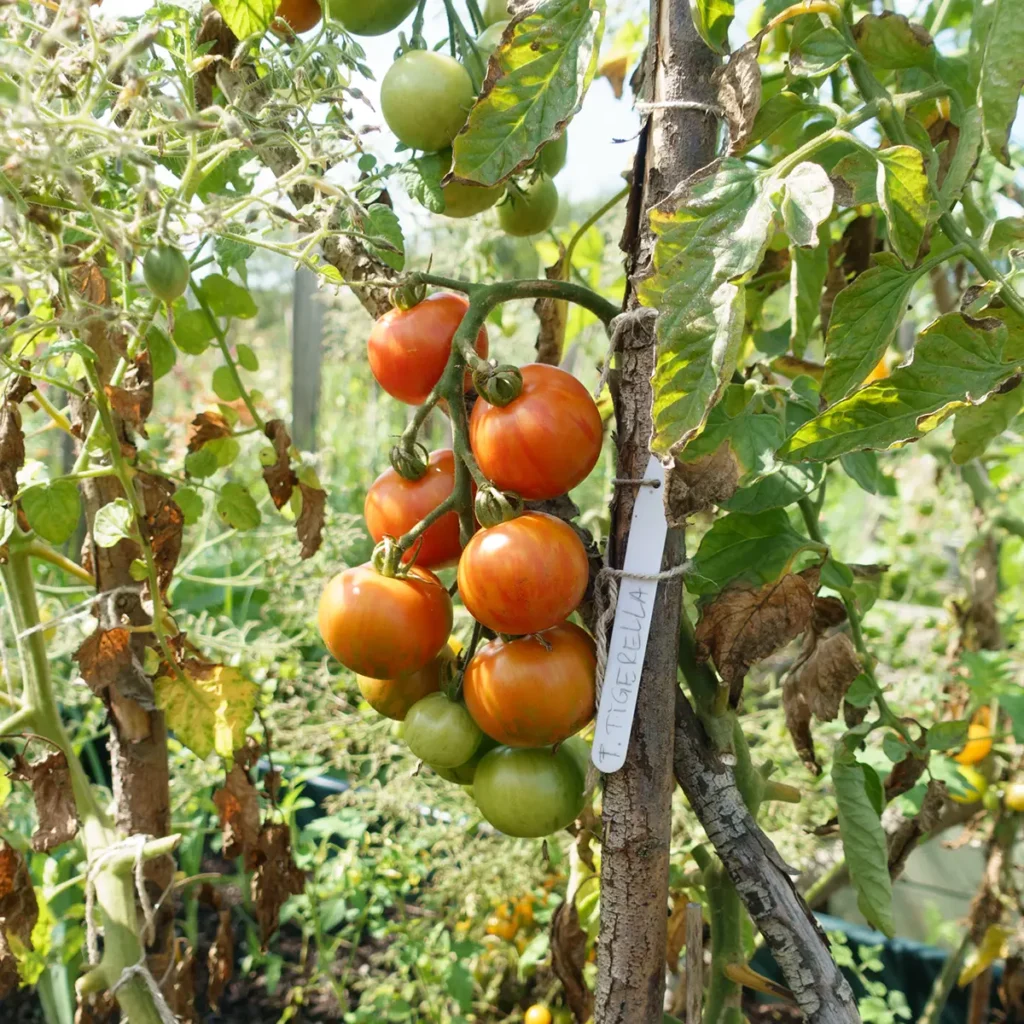
- Tigerella Bicolore (mixed results due to splitting, trying again this year)
Watering tomatoes consistently (and avoiding ‘The Split’)

The greatest threat to an outdoor tomato isn’t the rain itself, but the inconsistency of it. We’ve all seen the drama: a week of blistering heat dries the soil to a crust, followed by a sudden, violent summer thunderstorm.
What follows is splitting tomatoes. The starved plant gulps down the water so fast that the fruits literally cannot contain the pressure. They burst. It’s unsightly, yes, but those cracks are also a VIP lounge for moulds and fruit flies.
My method for a smooth-skinned harvest:
- Consistency is King: Water the tomatoes yourself, regularly, even if you suspect (or pray) that rain is coming tomorrow. This keeps the plant’s nutrient intake steady and ensures the skin remains supple. Think of it as a daily moisturizing routine. (Oh my, I sound like an advert for anti-wrinkle cream!)
- Mulching: Cover the soil around your plants with straw, grass clippings, woodchips, or compost. This slows evaporation and keeps the root zone stable, even when the sun is trying its best to turn your plot into a desert.
The hard lesson: prune tomato suckers!
In my first year on the allotment, I fell into the trap that ensnares every sentimental beginner: I let nature take the lead. I didn’t visit often enough, and before I knew it, my tomato plants had developed into an impenetrable jungle of stems and side-shoots.
The result was a tragedy of wasted energy. The plants poured their soul into producing masses of foliage and extra branches (the ‘suckers’), saving almost no energy for the actual fruits. Furthermore, that dense thicket of leaves stayed damp for hours after a rain, practically begging for disease to move in.
Now I check my plants at least twice a week for suckers lurking in the leaf axils. By training the plant strictly up a single stake and snapping off side-shoots the moment they appear, you ensure every ounce of energy goes into the juicy fruits.
Growing tomatoes outdoors? No greenhouse, no problem

If you lack a greenhouse, don’t let the experts deter you. With the right varieties, timely pruning, and consistent watering you can bring in a harvest that puts the taste of supermarket offerings to shame.
Nature is tougher than we give her credit for, provided you get the basics right. Will you be brave enough to try growing tomatoes outdoors?