✉ hello@onemoregarden.com


It is late April 2026, and the thermometer reads 20°C. While that is fairly typical for the Netherlands this time of year, the drought is anything but. For weeks now, I have been waiting for a fresh rain shower. Or more accurately: the plants in my garden on heavy clay are desperate for a drink.
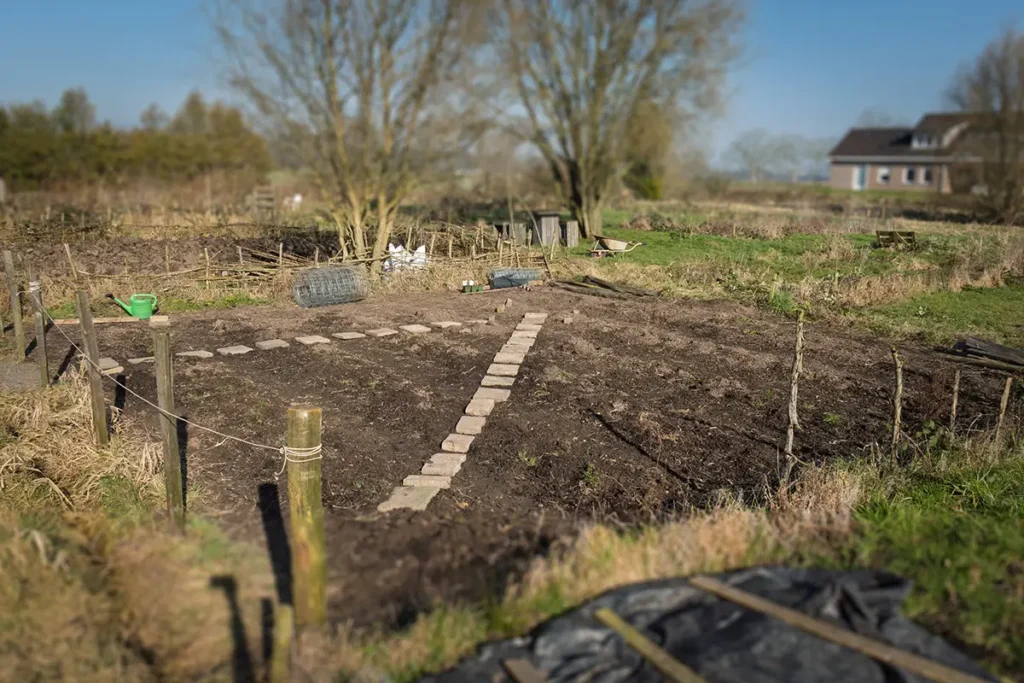
Let me introduce you to my green sanctuary. Back in November 2022, I finally secured an allotment near my home. In the Netherlands, getting your hands on a plot is no small feat. Waiting lists are notoriously long, so I was as happy as a child with my 50-square-meter patch in the polder – situated on the heavy river clay of the Waal, a distributary of the mighty Rhine.
A new chapter: from 50 to 100 square meters
I spent two years nurturing that piece of land with loads of compost to amend the heavy clay soil and woodchips for the paths. Then came the news: an entire row of gardens including mine had to go. But as the saying goes, when one door closes, another opens. I moved to a row that was allowed to stay and was gifted a plot of 100 square meters. Twice the size of my old garden!
Low-budget, high-ambition
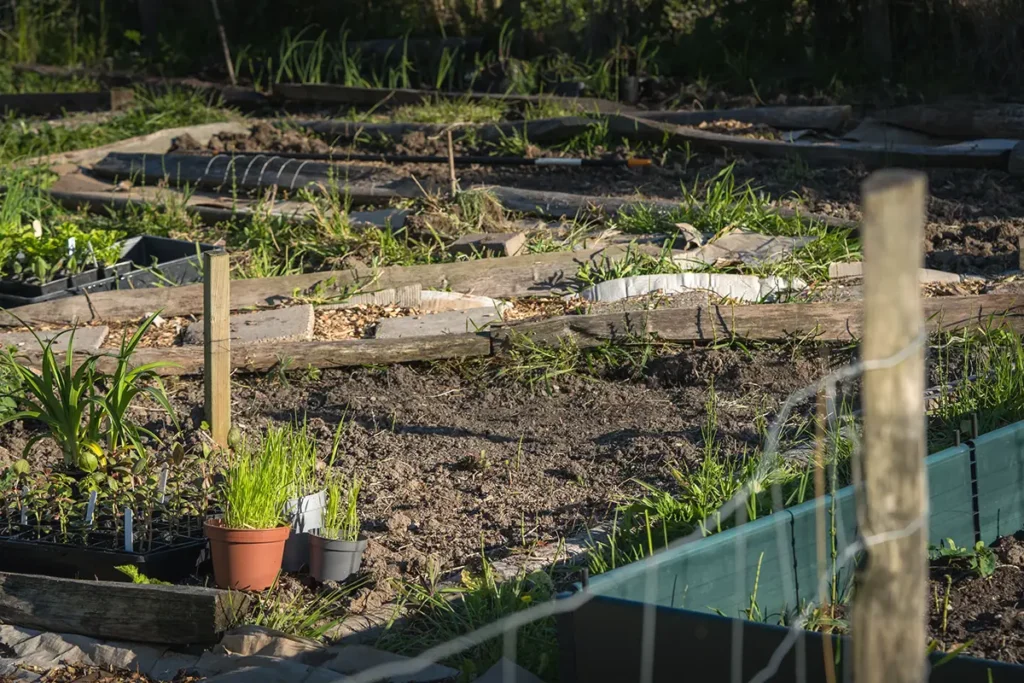
A major perk was that the previous owner had applied a generous layer of compost the year before. The challenge? I had recently transitioned from a steady job to freelancing, meaning I had to watch my finances closely. Challenge accepted.
I am now starting my second year in this ‘new’ kitchen garden. I have tweaked the design since last year – narrowing the paths and widening the western border – to squeeze in even more plants.
I have already made my first mistake, though: I started reconfiguring the garden too late! The areas enriched with compost are still workable, but the sections that served as paths last year are nearly impenetrable. Due to the persistent drought, the clay is rapidly turning rock-hard. This makes removing twitch grass, comfrey, thistles, brambles, and nettles even more of a workout than usual.
However, I am not letting that dampen the fun. Most of the vegetable and flower beds are now ready for planting. The rest will follow in the next two weeks (hopefully after some rain!).
My kitchen and cutting garden: late April 2026 update
Let’s take a look at the progress so far and my plans for the coming weeks.
The early starters in open ground

Let’s start with the basics: what is already growing in that heavy clay garden. My ‘Rode Eersteling’ potatoes received VIP treatment. As soon as they arrived in mid-March, I placed them in the cold frame to chit. They went into the ground on March 28, and three weeks later, the first foliage poked through. They are growing so vigorously that I will have to start earthing them up soon.
The perennials are also making their presence known. A large clump of chives is blooming beautifully, and the thyme is showing its flowers. One of my current favorites is the wild marjoram (Origanum vulgare). I transplanted it from my old garden last year, and it has expanded fantastically. It is the perfect plant for this spot: excellent ground cover, low maintenance, drought-tolerant, and a total magnet for pollinators.

My goal is to incorporate more perennials into my kitchen and cutting garden to save both time and money on raising new plants every year.
The Geopod nursery
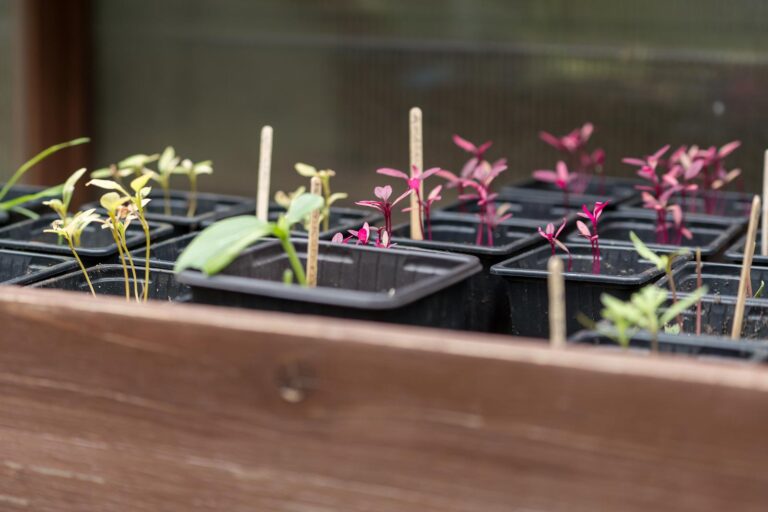
Indoors (and in the cold frame), things are buzzing. I use a Geopod heated propagator with grow lights, which is my secret weapon this time of year. In early March, I started sowing sun-lovers like the ‘Roviga’ bell pepper, chili peppers, and tomatoes (‘Tigerella Bicolore’, ‘Moneymaker’, and ‘San Marzano’). The first flowers for the cutting garden – including four types of snapdragons, feverfew, and the stunning Rudbeckia hirta ‘Sahara’ – also went into the trays then.
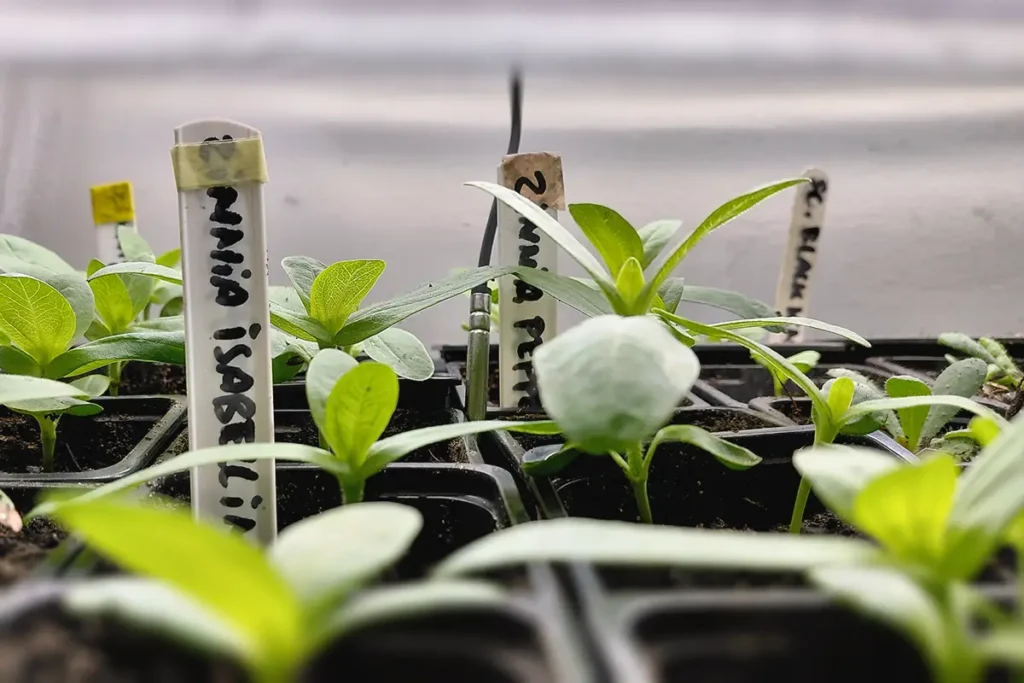
A second round followed in early April: Didiscus ‘Pink Lace’, various Limonium species, Scabiosa, and a wide selection of Zinnias. Meanwhile, in the cold frame, eight varieties of dahlias are warming up in pots. Most are already showing hopeful signs of life.
Trial and error
Of course, not everything goes to plan. The chili peppers, the Scabiosa ‘Deep Purple’, my favorite Zinnia ‘Zinderella Peach’, and the strawflower ‘Pretty Pink’ failed to germinate at all. It is all part of the process, frustrating as it may be. On April 27, I re-sowed the Didiscus, ‘Zinderella Peach’, and strawflowers. Fingers crossed for better luck this round.
Meanwhile, the tomatoes have been hardening off for a while. Thanks to this year’s mild weather, they are well ahead of the traditional “Ice Saints” schedule. As soon as night temperatures stabilize above 10°C, I will plant them out in my heavy clay garden.
Experiments and the ‘Great Raspberry Relocation’
Sometimes you have to be ruthless. The autumn raspberries I planted so enthusiastically last year did a little too well. They started taking over, so I removed them from the kitchen garden. Two small bushes received a pardon. They are now in large pots in my back garden at home, where they cannot escape.
Finally, I conducted a small experiment with the snapdragons this week. I pinched out the seedlings to encourage better branching, but I didn’t toss the tops. I used them as cuttings in the hope of getting free plants. If they take root, I’ll have 20 extra snapdragons for my cutting garden. Wish me luck!
Getting my garden on heavy clay ready for May

I have been eyeing permanent climbing structures for years, as they add structure and visual appeal to the garden. I finally took the plunge and bought a rose arch and two obelisks from CLP. I’ll be setting those up shortly.
Also on the to-do list: planting out my young plants, sowing sunflowers, building a bean trellis, and sowing the beans. These will go directly into the ground, along with the beetroot.
And after that? I’ll be scouting for any remaining gaps to tuck in even more plants. Because honestly, there is always room for one more.