✉ hello@onemoregarden.com


If you spend too much time in garden centers, it’s easy to believe you need an arsenal of their essential gardening tools to grow a few tomatoes or keep the borders in shape. Shelves stacked with gadgets promise to save time, solve problems, or make you a better gardener. In reality, most of them end up forgotten in the shed – slowly rusting away.
By now I’ve been gardening long enough to know I don’t need much. My soil is heavy clay, my time is limited, and I’d rather be outside enjoying actual gardening than fiddling with equipment. Over the years, five tools have proved themselves indispensable – simple, sturdy, and used almost every gardening session. The rest? They can stay on the shop shelf.
My 5 most essential gardening tools
So what tools can I really not do without? Here is my personal top 5:
1. A good hand trowel

The trowel is the tool I reach for most often, whether I’m planting out young plants, moving self-seeded flowers, or prying obnoxious weeds from the clay. It’s small, but it does so much of the everyday work!
I’ve bent and snapped my share of cheap ones. They look sturdy on the shelf, but once they meet heavy soil, they twist like tin foil. If you can, choose a solid, one-piece design – the kind where blade and handle are forged together. It doesn’t have to be expensive, but it should feel balanced in your hand, not flimsy.
In the end, the best trowel is the one that disappears into habit: the tool you notice only when you’ve misplaced it (which in my case is all the time …), and suddenly every task feels harder without it.
2. Secateurs (pruning shears)

Whether it’s cutting back dead stems, harvesting squash, or deadheading flowers, a sharp pair of secateurs saves endless frustration. With blunt ones, you crush more than you cut. With sharp ones, you feel like a surgeon (even more so when you accidentally cut your finger and bleed all over your tomatoes – I speak from experience).
Good secateurs don’t need to be flashy, but they should fit your hand comfortably and be easy to sharpen. Bypass blades (like scissors) are generally better for live stems than anvil types, which can bruise and damage. And if you’re prone to losing tools in the grass – as I am – a bright handle colour is worth more than you think.
A word of warning: once you own a decent pair, you’ll find yourself snipping everything in sight. Pruning can become addictive (though I don’t think a Pruners Anonymous exists yet, so any pruning addiction is probably not too unhealthy).
3. A digging fork

On heavy clay soil, a spade can feel like an instrument of torture. That’s where the fork earns its keep. It breaks up clods, lifts potatoes (even when the dry top soil in summer is quite solid), and turns compost without straining your back nearly as much as a flat blade. And it’s the only tool that actually helps me dig up the couch grass on my allotment.
Go for one with solid steel tines, ideally not too wide if your soil is dense. And don’t be seduced by lightweight versions unless your ground is already soft or sandy – they’re no match for stubborn clay.
4. A pair of sturdy gloves

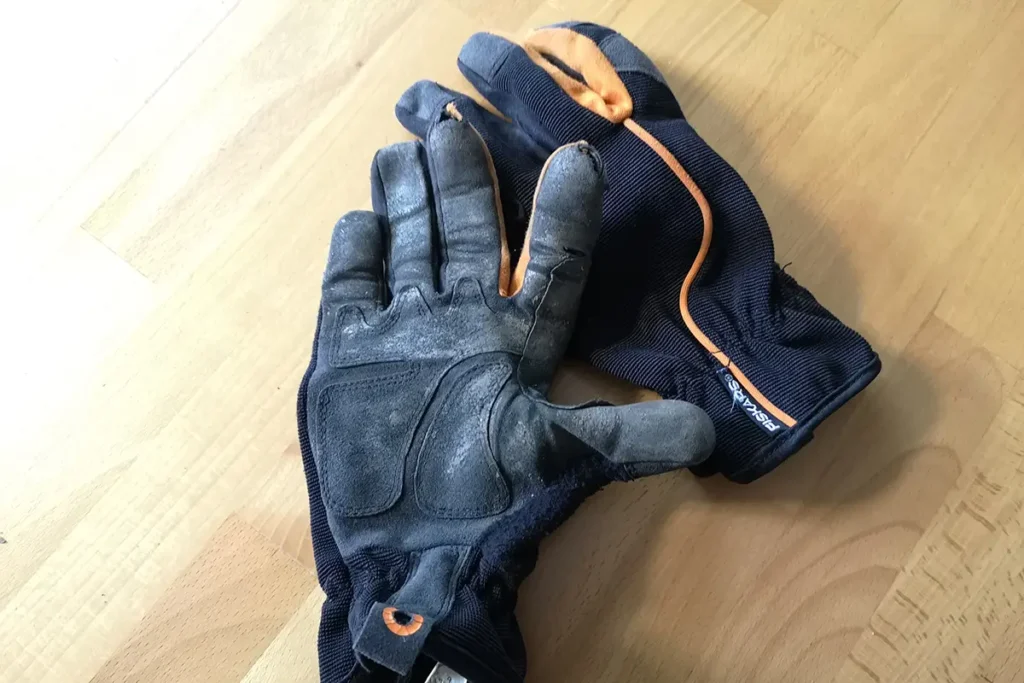
Brambles, nettles or basically anything with thorns all have a way of reminding you that gardening is not always a gentle pastime. Nature sometimes fights back! A good pair of gloves saves your hands from scratches, blisters, and the occasional sting, and they make tough jobs – hauling compost, pulling nettles, handling prickly stems – far less daunting.
I’ve tried thin gloves that tear after a weekend, and thick ones so clumsy I could barely pick up a seedling. The sweet spot is a pair that’s tough enough to protect you, but flexible enough to let you actually feel what you’re doing.
The truth is, gloves don’t last forever. They’ll wear out, get muddy, get shredded by tough thorns and eventually find their way to the bin. But when you find a pair you like, buy two. Your hands will thank you.
5. A watering can (with a good rose)

With hoses, sprinklers, and elaborate irrigation systems on offer, it might seem old-fashioned to rely on a watering can. But for precision, nothing beats it. You can drench the roots of a thirsty tomato without soaking its leaves, or give a new seedling the gentle sprinkle it needs without washing it away. And it fits neatly underneath the tap of rain barrels (or just scoop the water from the top of a barrel to fill it faster).
The can itself is only half the story – the rose (the detachable spout with holes) makes all the difference. A fine rose gives you control; a poor one floods everything. If you can, invest in a can that feels well-balanced when full, and a rose you actually enjoy using.
It may not be glamorous, but carrying water to plants is one of those timeless gardening rituals that connects you directly to your patch of earth.
Slightly less essential gardening tools
Not every tool earns daily use, but a few extras make life in the garden noticeably easier. They’re practical, inexpensive, and often prove their worth at just the right moment.
- Garden string: For tying in tomatoes, supporting climbing beans, or hanging flowers to dry. I go through rolls of it every season and somehow never have enough.
- Ground drill: A sturdy manual drill makes short work of clay soil, whether it’s for poles, bulbs, or planting holes. Mine comes out every spring and autumn.
- Wheelbarrow: Compost, wood chips, weeds, or just heavy pots – a barrow saves endless trips and spares your back.
- Hand hoe/cultivator: Ideal for loosening topsoil and weeding around young plants. Small, simple, and surprisingly versatile.
- Crates: Perfect for shuttling young plants, storing pots, or hauling harvests. I use them far more than I ever expected.
In the end, gardening doesn’t demand a shed full of gadgets — just a few reliable tools and a couple of helpful extras. The rest is time, patience, and the pleasure of being outside.